A bridal collection that moves from sacred Indian landscapes to the blue-green waters of Antigua is already telling us something about the bride it imagines.
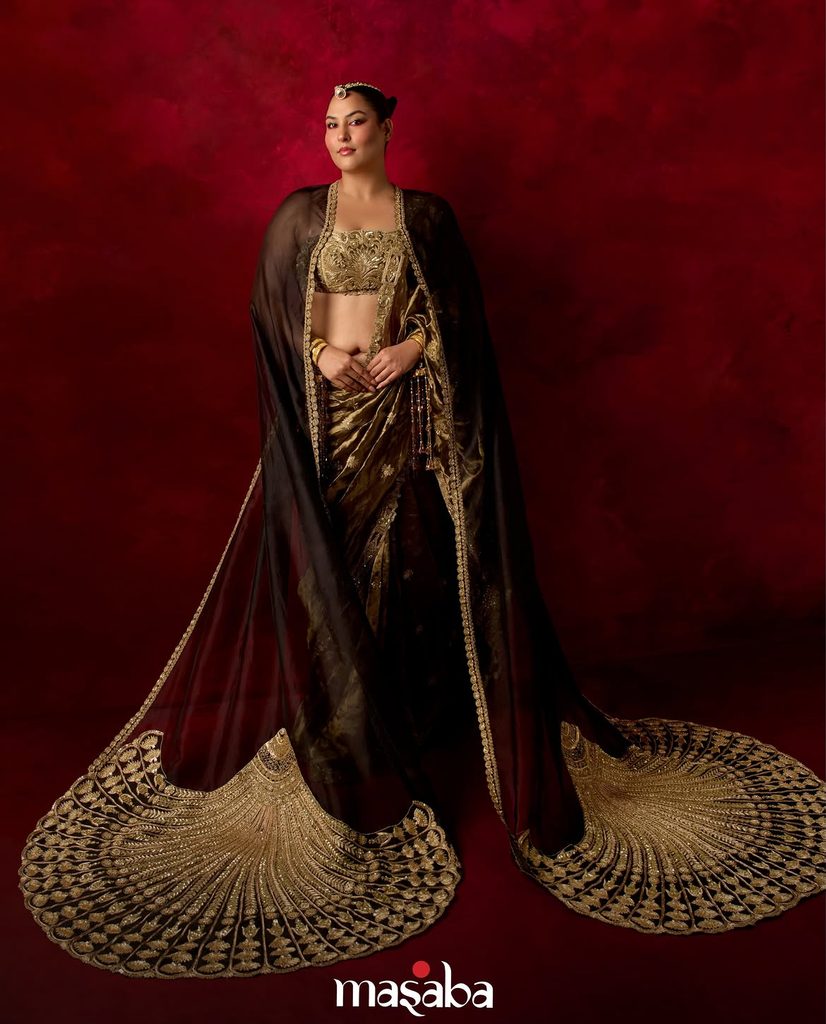
With Chardi Kala, her first bridal couture collection, Masaba Gupta does not treat the wedding wardrobe as a single ceremonial statement. She treats it as a journey. One that can begin with deeply Indian references, pass through traditional craft and full-skirted lehengas, and arrive somewhere altogether freer, where jackets, separates, resort influences and tropical motifs sit comfortably beside zari and embroidery.
That movement is the key to understanding Masaba Bridal Couture’26. This is less about reinventing bridalwear garment by garment and more about loosening the rules around what bridal couture is allowed to feel like.
The Bride Is Rooted, But She Is Not Standing Still
The name Chardi Kala is associated with optimism and resilience, and that sense of forward movement runs through the collection. House of Masaba describes its narrative as beginning in India before travelling towards Antigua and the Caribbean, where bridal dressing gradually transforms into what it calls “resort bridal”.
It is an apt reflection of the modern Indian wedding itself.
Celebrations increasingly move across multiple functions, moods and locations. A bride may need one wardrobe for an intimate ritual, another for a formal ceremony, and something entirely different for a poolside lunch or destination after-party. Chardi Kala acknowledges that reality instead of forcing every moment into the vocabulary of conventional bridal grandeur.
The result is a collection that respects tradition without freezing it in place.
Indian identity remains visible throughout. Embroidered maps, familiar motifs, rich colour, zari work and handcrafted embellishment keep the collection culturally grounded. Yet those references sit beside tropical imagery, relaxed layers and styling that feels less concerned with ceremony for ceremony’s sake.
It suggests a bride who does not see heritage and individuality as opposing choices.
Colour Returns Without Apology
One of the clearest statements in Masaba Bridal Couture’26 is its refusal to reduce contemporary bridal dressing to a restrained palette.
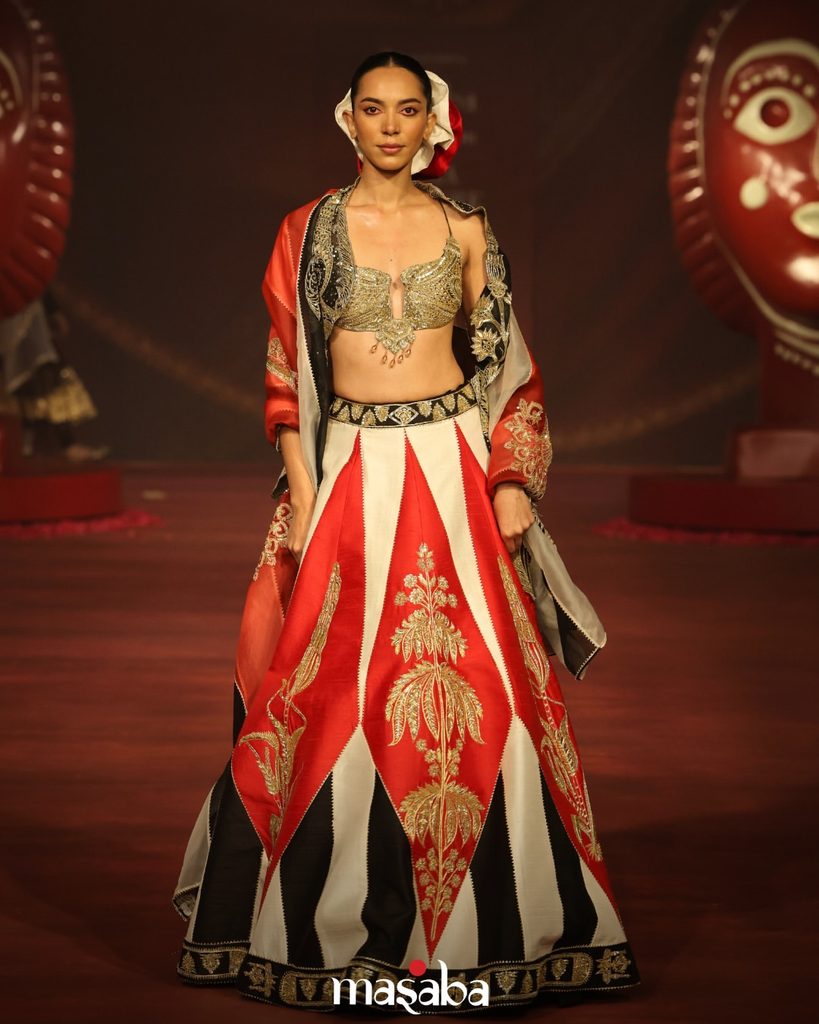
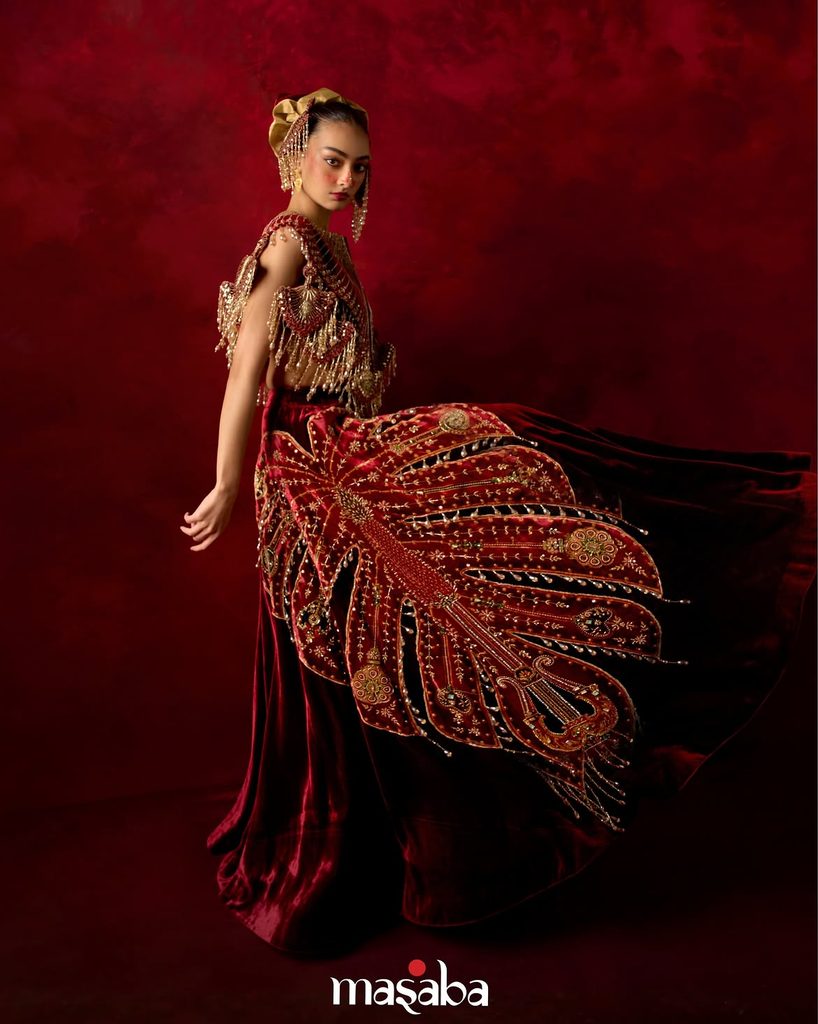
The collection moves through crimson, fuchsia, violet, green, deep brown and softer tones rather than relying on a single idea of what modern bridal colour should look like. Reports from the India Couture Week presentation also noted the use of tropical greens and jewel tones alongside traditional reds.
This feels consistent with Masaba Gupta’s wider design language. Colour has rarely operated as decoration alone within the House of Masaba universe. It carries personality.
In Chardi Kala, it also becomes a way of rejecting the assumption that sophistication must always mean quietness.
The collection is joyful without becoming frivolous. It allows strong colour, metallic surfaces and oversized motifs to exist within couture craftsmanship rather than treating restraint as the only route to luxury.
For bridal fashion in 2026, that matters. The conversation is no longer simply between traditional red and modern pastel. The more interesting question is whether a colour feels personal enough to belong to the wearer.
Masaba’s answer appears to be: wear the colour with conviction, and let that confidence create its own sense of elegance.
Couture That Does Not Want to Feel Heavy
Indian couture has historically drawn much of its visual impact from density. More embroidery, more volume and more ornament have often served as shorthand for importance.
Chardi Kala challenges that relationship.
The runway included tissue sarees, sheer layers, flowing capes, dhotis, structured separates and full bridal lehengas. Even some of the more elaborate pieces were designed within a broader vocabulary of movement.
That does not mean craft disappears. Quite the opposite.
Zari, sequins, embroidery, crystals and hand embellishment remain integral to the collection. The difference lies in how Masaba uses them. They create richness without requiring every silhouette to feel ceremonial or physically imposing.
This may be the collection’s most relevant proposition for contemporary brides.
Luxury no longer has to announce itself through weight.
A garment can still carry hours of craftsmanship while allowing the wearer to move, dance and inhabit the celebration rather than simply be displayed within it. That shift from visual grandeur to lived experience mirrors what is happening across the wider luxury wedding landscape.
The clothes still need to make an entrance. They just need to let the bride live after making it.
Masaba’s Motifs Grow Up With the Bride
House of Masaba has always been associated with motifs that refuse to behave like conventional luxury symbols.
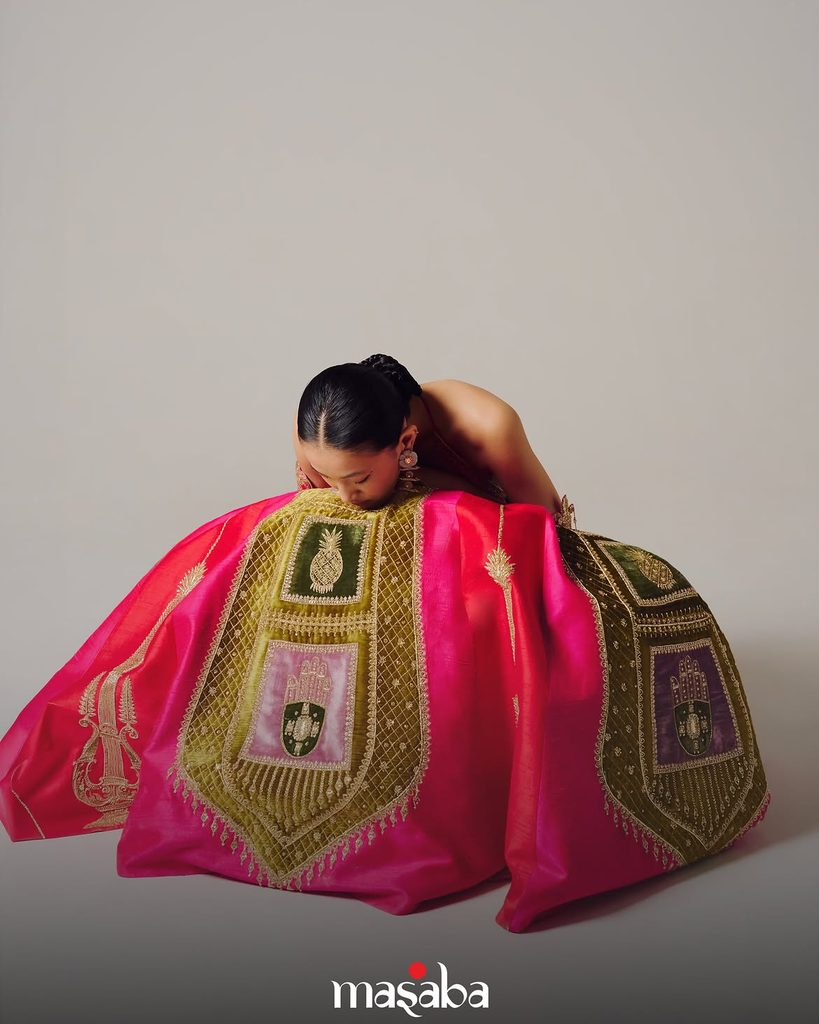
For Bridal Couture’26, that graphic instinct remains visible, but the treatment becomes more elaborate. Pineapples, palms, maps of India and signature insignia appear through embroidery, placement prints, embellishment and metallic surfaces. Later pieces from the collection’s rollout have included the Antique Insignia, Golden Odyssey print and India to Antigua motif language.
This is significant because Masaba does not abandon the codes that made the label recognisable in order to enter couture.
She elevates them.
That distinction allows the collection to avoid becoming an anonymous exercise in bridal opulence. The craft may become finer and the silhouettes grander, but the humour, graphic confidence and cultural references remain recognisably House of Masaba.
The collection therefore makes a broader point about contemporary Indian luxury. Heritage need not always appear through familiar floral vines, palace architecture or archival motifs.
A pineapple can carry craft. A map can become ornament. A print can sit beside zardozi without diminishing it.
Couture becomes less about following an established visual hierarchy and more about the depth with which an idea is executed.
From India to Antigua
The collection’s shift towards Antigua and the Caribbean initially sounds like a dramatic change of direction. In practice, it reveals one of its strongest ideas.
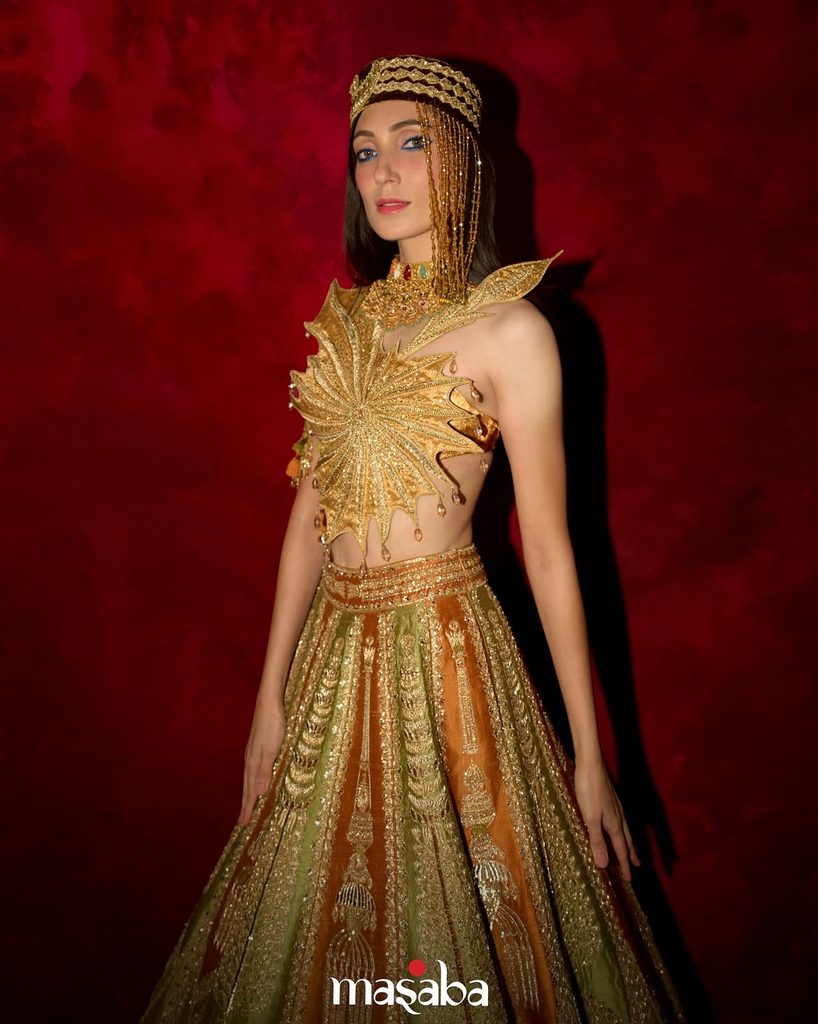
Masaba has long spoken through a design vocabulary that brings Indian references into conversation with tropical influences. In Bridal Couture’26, that relationship becomes particularly useful because it mirrors the increasingly global setting of Indian weddings.
Destination celebrations have changed the bridal wardrobe.
The clothes required for a palace ceremony in Rajasthan are not necessarily the clothes a bride wants for a beachside dinner two days later. Yet both still belong to the same wedding story.
By moving from traditional bridalwear into resort bridal, Chardi Kala proposes continuity rather than contradiction.
The bride can wear an intricately worked lehenga and later move into a sharply tailored jacket, a fluid dress or a tropical-inflected separate without the second look feeling disconnected from the first.
House of Masaba’s subsequent India to Antigua presentation makes that idea even more explicit. The brand describes it as a celebration of women who carry India with them wherever they go, positioning home as an emotional identity rather than simply a geography.
That may be the most contemporary part of the entire collection.
Indian bridalwear does not have to remain physically in India to remain culturally Indian.
The Styling Refuses to Be Obedient
The collection’s attitude also comes through in the way it was styled.
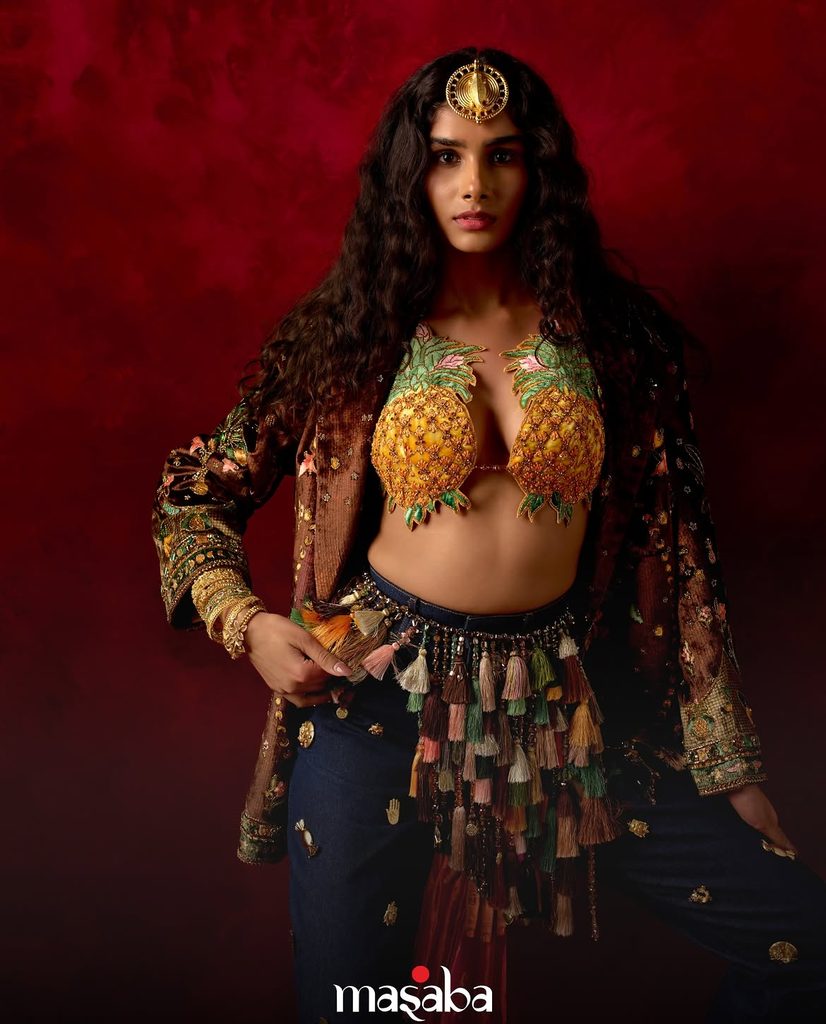
Traditional jewellery appeared beyond the conventional necklace-and-earring formula. Headpieces, hair adornments and stronger combinations shifted jewellery from expected bridal finishing into personal expression. Indriya collaborated on the jewellery for the India Couture Week presentation.
Elsewhere, the collection juxtaposed bridal craft with pieces such as jeans, jackets and contemporary separates. Later Bridal Couture’26 looks included velvet tailoring, corsetry and embellished denim alongside familiar House of Masaba motifs.
The effect is not rebellion for its own sake.
It is an acknowledgement that the modern bride has grown accustomed to mixing wardrobes and references in everyday life. She may pair heirloom jewellery with a sharply cut blouse, wear a traditional silhouette in an unexpected colour, or choose denim for one celebration and a heavily embroidered lehenga for another.
Why should her wedding suddenly require a single, obedient aesthetic?
Chardi Kala allows contradiction. That freedom gives the collection much of its energy.
What Masaba Bridal Couture’26 Really Says About the 2026 Bride
The most interesting thing about Chardi Kala is not any single lehenga, saree or experimental separate.
It is the absence of one fixed bride.
There is room here for ceremony and escape, heritage and humour, ornament and ease. Traditional silhouettes coexist with tailoring and resort dressing. Familiar Indian craft sits beside graphic motifs and tropical references.
That breadth reflects the way weddings themselves have changed.
The contemporary Indian bride is no longer dressing for one photograph or one defining entrance. She is dressing for several days, different settings and multiple versions of herself.
Masaba Bridal Couture’26 understands that the wedding wardrobe can hold all of them.
And perhaps that is why the collection feels less like Masaba Gupta entering the established world of bridal couture and more like her asking bridal couture to enter hers.