
The most convincing luxury technology no longer asks to be hidden when it is not in use. A speaker can double as sculpture. A screen can become part of the architecture. Even a hair tool can earn its place on a carefully considered dressing table.
That shift is changing the way technology fits into a luxury lifestyle. Performance still matters, but so do materials, proportions, craftsmanship and the ability to sit comfortably alongside good furniture, art and fashion.
From Bang & Olufsen’s architectural approach to home cinema to the ongoing meeting of Apple technology and Hermès craftsmanship, these five pieces make the case for technology designed to be lived with, not merely operated.
Bang & Olufsen Beosound Theatre: The Soundbar as Furniture
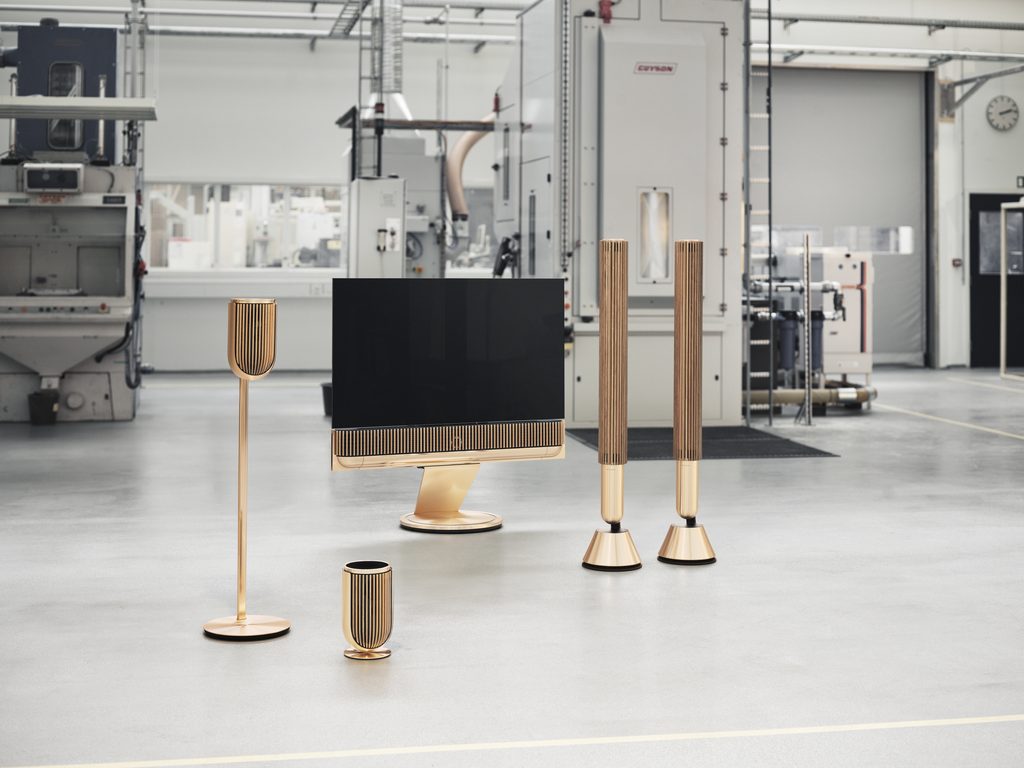
Most soundbars are designed to disappear beneath a television. The Bang & Olufsen Beosound Theatre takes almost the opposite approach.
Its sculptural form combines aluminium with interchangeable covers, including an oak option, turning the audio system into a considered part of the room. Behind that exterior sits a Dolby Atmos home cinema system designed to act as the centrepiece of a larger Bang & Olufsen surround-sound set-up.
The modularity is particularly relevant to luxury interiors. Rather than treating technology as something that inevitably dates a room, Bang & Olufsen has designed Theatre to work within an evolving system.
That makes it less about adding another electronic box to the living room and more about integrating sound into the interior itself.
Why it belongs: For homes where speakers, screens and furniture need to speak the same design language.
Price: Bang & Olufsen currently lists Beosound Theatre internationally from US$13,600. India pricing may vary by configuration and retailer.
Samsung The Wall: When the Television Becomes Architecture
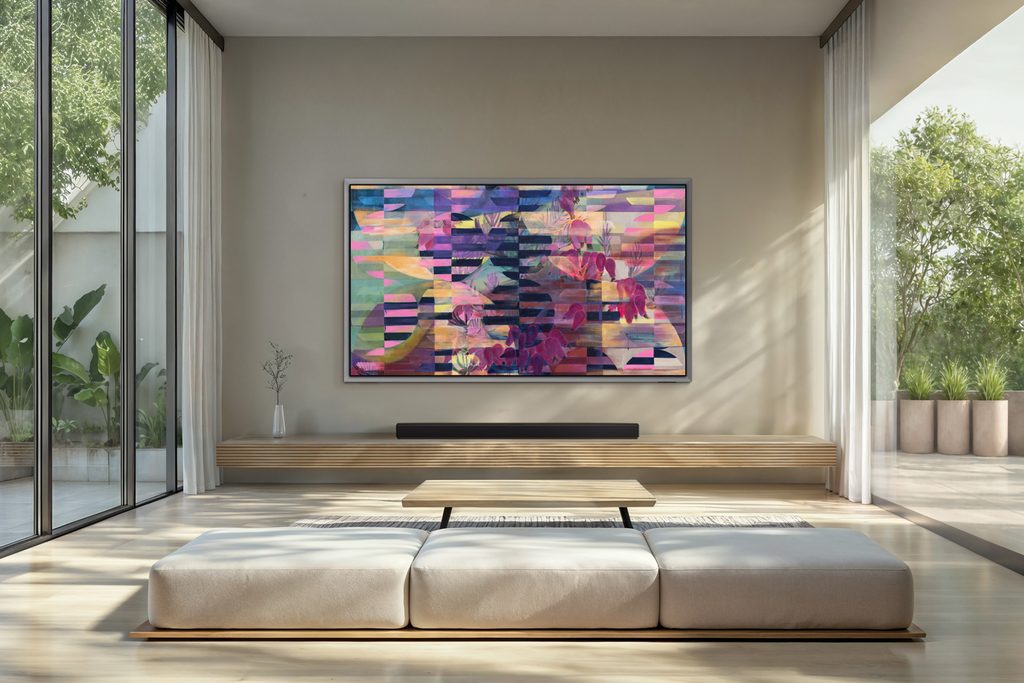
There are large televisions, and then there is Samsung The Wall.
Its MicroLED technology uses microscopic LEDs as individual light sources rather than relying on conventional backlighting. The modular format allows the display to operate on a scale closer to an architectural installation than a standard television.
That changes its role inside a home. Instead of arranging the living space around the limitations of a screen, The Wall can become part of the room itself. Samsung has also positioned versions of its MicroLED displays with extremely narrow or effectively invisible bezels and art-display functionality.
For expansive residences, private screening rooms and home galleries, the appeal is as much spatial as technological. It is a screen intended to command a wall rather than occupy a corner of it.
Why it belongs: For interiors where the screen itself becomes part of the architecture.
Price: Samsung launched its 110-inch MicroLED in India at ₹1,14,99,000 in 2023. Current configurations and pricing should be confirmed directly with Samsung.
Devialet Phantom I 108 dB Opéra de Paris: Sound With a Gilded Edge

The Devialet Phantom I 108 dB Opéra de Paris looks almost too sculptural to be treated simply as a wireless speaker.
Created in association with the Paris Opera, the special edition brings gold-leaf detailing to Devialet’s distinctive Phantom form. The brand’s official listing describes gold-leaf side plates, turning a technically complex audio product into something closer to a decorative object.
The technology remains central. Phantom I supports wireless streaming, including AirPlay, while Devialet’s characteristic compact form is designed to deliver unusually powerful audio from a relatively contained footprint.
That tension is precisely what makes it interesting. It can sit on a console or bookshelf like an object chosen for its shape, yet its reason for existing remains acoustic.
Why it belongs: For a private lounge, study or listening room where audio equipment is expected to contribute visually too.
Availability note: Devialet currently places the Phantom I 108 dB Opéra de Paris within its legacy range, so availability should be checked before purchase.
Apple Watch Hermès Series 11: Technology Dressed by a Maison

The partnership between Apple and Hermès remains one of the clearest examples of consumer technology crossing comfortably into traditional luxury.
For 2026, Apple Watch Hermès is offered with the Apple Watch Series 11 in 42mm and 46mm silver titanium cases. Apple’s hardware brings health, fitness and connectivity functions, while the Hermès collaboration introduces its own straps and visual identity.
The appeal lies in that contrast. A conventional luxury watch communicates through mechanical craft and permanence. The Apple Watch belongs to a world of software updates, sensors and changing functionality. Hermès gives that rapidly evolving object a connection to fashion and traditional watch accessories.
It is therefore less a substitute for a mechanical timepiece than a different proposition altogether: wearable technology that does not require its owner to abandon an appreciation for material and detail.
Why it belongs: For daily wear when health data and connectivity matter, but so does what sits beneath a shirt cuff.
Current model: Apple Watch Hermès Series 11. Apple Watch Series 11 itself starts at ₹46,900 in India, while Hermès configurations carry separate premium pricing.
Dyson Airstrait: Engineering Moves to the Dressing Table

The Dyson Airstrait addresses a familiar beauty routine with an engineering-first solution: straighten hair while drying it, without conventional hot plates.
Instead, precisely directed heated airflow dries and straightens wet hair at the same time. Dyson describes the technology as a way to achieve a straight finish without the extreme heat associated with traditional heated plates.
That makes it interesting beyond the beauty category. Dyson has spent years turning airflow into an identifiable design language across appliances and hair tools. Airstrait continues that approach with a device that feels closer to precision equipment than a traditional straightener.
Its streamlined routine is part of the luxury too. One tool replaces the sequence of drying and then straightening, reducing the amount of equipment required on a dressing table or packed for a trip.
Why it belongs: For travellers and beauty enthusiasts who value efficient routines as much as industrial design.
Price: Dyson India currently lists the Airstrait at ₹29,900, reduced from an MRP of ₹45,900 at the time of writing. Pricing may change.
When Technology Earns Its Place in the Room
There is a useful distinction between expensive technology and luxury technology.
The former can justify its price through greater power, a larger display or additional features. The latter needs to offer something less measurable. It must consider how an object feels, how it ages visually and what happens when it enters a space already shaped by furniture, fashion, art and personal taste.
That is what connects these five products despite their very different functions.
Bang & Olufsen treats sound equipment as furniture. Samsung turns the screen into architecture. Devialet makes acoustic engineering sculptural. Apple and Hermès bring two very different design traditions onto the wrist. Dyson applies precision engineering to a beauty ritual.
The technology may be sophisticated. The luxury lies in making that sophistication feel entirely at home.
Pingback: Flavour Flamboyance: Two Regional Indian Recipes Worth Bringing to the Table - Regal Celebrations